
AI agents have transitioned from theoretical constructs to real-world productivity drivers. In 2025, they are becoming the operational backbone of enterprises, enabling automation, decision-making, and user interactions across multiple domains. But what exactly is AI agent development, and why is it gaining so much attention right now?
Understanding AI Agent Development
AI agent development is the process of creating intelligent software systems capable of performing tasks, making decisions, or interacting with users autonomously. These agents are typically built using large language models (LLMs), machine learning algorithms, and natural language processing (NLP) techniques.
An AI agent can be a:
Virtual assistant handling customer queries
Autonomous sales agent generating leads and follow-ups
Operational bot automating internal workflows
AI co-pilot supporting employees in data analysis and decision-making
Development involves training the agent on domain-specific data, integrating it with tools (like CRMs, APIs, or email platforms), and giving it a clear set of goals, rules, and feedback loops.
Core Capabilities of AI Agents in 2025
Modern AI agents in 2025 are not just reactive—they are goal-oriented and multi-functional, designed to improve over time. Key capabilities include:
Natural conversation with users across platforms
Learning and adaptation based on user feedback or task outcomes
Tool integration, allowing the agent to use software just like a human would
Task planning and execution, from complex research to automated reporting
Autonomy with oversight, where the agent can act independently but remain auditable
Why AI Agent Development Matters in 2025
Here’s why AI agent development is becoming indispensable:
1. Workforce Automation Is Shifting Gears
Businesses are moving beyond simple rule-based automation to intelligent task automation. AI agents can handle nuanced tasks, interpret data, and carry out multi-step processes—saving hours of human effort.
2. Customer Expectations Are Rising
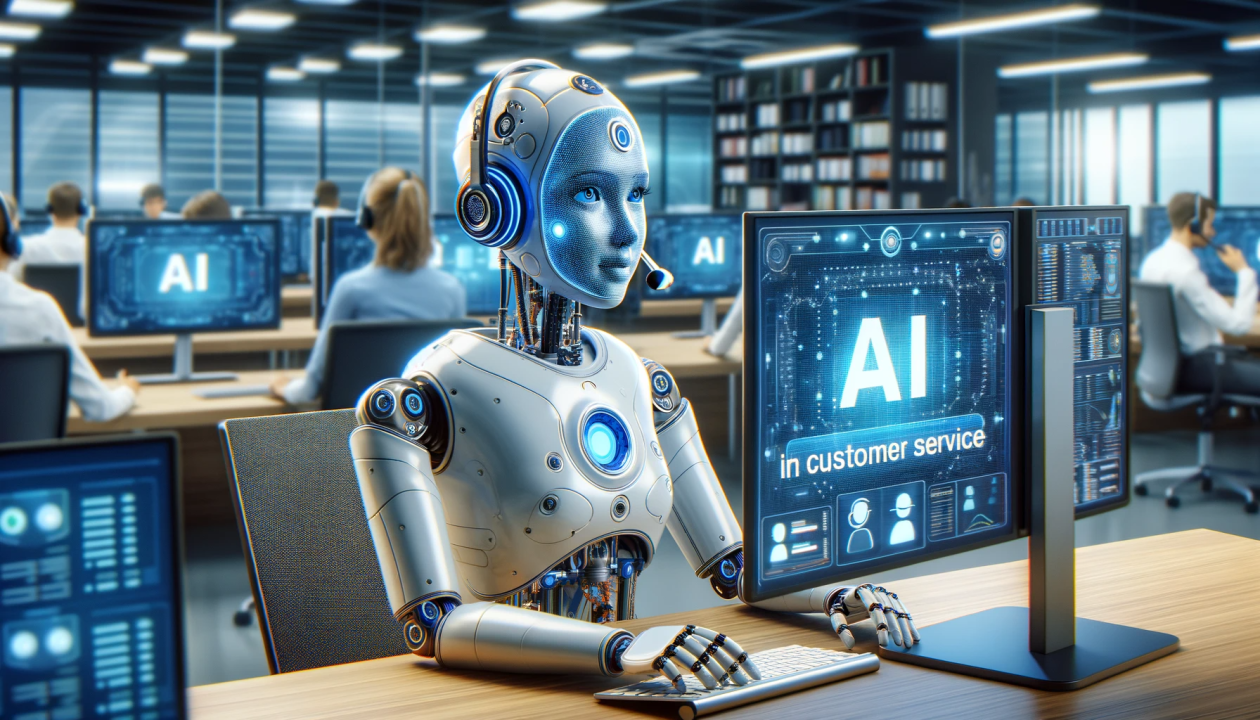
Today’s customers expect instant, intelligent responses. AI agents provide 24/7 support, reduce human dependency, and improve personalization, leading to better satisfaction and loyalty.
3. Massive Time and Cost Efficiency
With agents handling repetitive and operational tasks, human teams can focus on strategy, creativity, and innovation. This shift translates into leaner operations and faster output.
4. Scalability Across Business Functions
AI agents can be deployed across departments—HR, finance, marketing, IT—without major overhead. They can manage onboarding, generate content, analyze datasets, and much more.
5. Data-Driven Decision Support
AI agents are excellent at sifting through large volumes of structured and unstructured data, identifying patterns, and offering actionable insights, turning noise into value.
Real-World Use Cases in 2025
Retail: AI shopping assistants that guide users to products, answer questions, and upsell in real time
Finance: Agents that monitor market trends, recommend portfolio changes, and execute trades
Healthcare: Virtual assistants that help patients book appointments, access medical records, and interpret lab results
Enterprise IT: Autonomous bots that resolve help desk tickets, manage software provisioning, and maintain system security
Technologies Powering AI Agent Development
Building robust AI agents in 2025 involves a convergence of advanced technologies:
Large Language Models (LLMs): For language understanding and generation
Vector Databases: For semantic search and contextual memory
RAG (Retrieval-Augmented Generation): For real-time access to external knowledge
Multi-agent Systems: For collaborative or specialized task execution
Prompt Engineering: For refining behavior and accuracy
Tools like LangChain, AutoGPT, OpenAI Functions, and AgentOps are widely used to orchestrate and monitor AI agent behavior today.
Challenges to Consider
While AI agents offer significant benefits, there are challenges:
Ethical and privacy concerns in handling user data
Security vulnerabilities in granting agents access to tools and systems
Dependability and interpretability, especially in high-stakes environments
Over-reliance on AI without human-in-the-loop safeguards
Careful design, auditing, and monitoring are necessary to ensure responsible AI agent deployment.
The Future Outlook
AI agent development is becoming central to digital transformation strategies. As models become faster, more cost-effective, and more capable of reasoning, we’re moving towards a future where:
Every employee may have a dedicated AI agent
Businesses run with minimal manual overhead
New service-based industries emerge around agent training and supervision
Companies investing in AI agent development today are building the foundation for highly adaptive, automated, and efficient operations tomorrow.
Conclusion: Embracing the Intelligent Future
AI agent development isn’t just another tech trend—it’s a business necessity in 2025. From transforming customer service to driving operational efficiency, AI agents are becoming trusted digital teammates across industries. Organizations that prioritize their development are positioning themselves for long-term success in an increasingly automated world.





Write a comment ...